Ebook Download Discussing Design: Improving Communication and Collaboration through Critique
Among the suggested and well-known books to have today is the Discussing Design: Improving Communication And Collaboration Through Critique When you type the title of this publication, all over, you will get it as one of the leading listed book to read. Even it is in guide store, publishers, or in some sites. Yet, when you are rally keen on guide, this is your perfect time to obtain as well as download and install today and also right here with your internet connection.
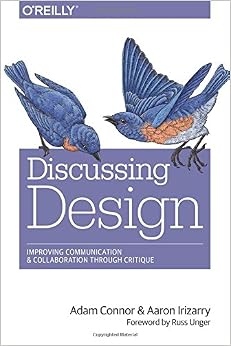
Discussing Design: Improving Communication and Collaboration through Critique

Ebook Download Discussing Design: Improving Communication and Collaboration through Critique
If you have been able right here, it indicates that you have the ability to type and attach to the internet. One more time, It means that internet turns into one of the option that could make ease of your life. One that you can do currently in this set is additionally one part of your effort to enhance the life quality. Yeah, this website now supplies the Discussing Design: Improving Communication And Collaboration Through Critique as one of materials to check out in this current era.
Do you require the literary works sources? Legislation or national politics publications, faiths, or scientific researches? Well, to show it, juts seek the title or style that you require based upon the categories given. However, previous, you are below in the good internet site where we display the Discussing Design: Improving Communication And Collaboration Through Critique as one of your sources. Also this is not also referred to as much; you could know and recognize why we actually recommend you to read this adhering to book.
Based on that situation, it's clear that your time to read this book will not invest squandered. You can begin to conquer this soft data book to choose better analysis material. Yeah, locating this publication as reviewing book will supply you distinctive experience. The intriguing subject, easy words to comprehend, and also appealing improvement make you really feel comfortable to only read this Discussing Design: Improving Communication And Collaboration Through Critique
Nevertheless, checking out guide Discussing Design: Improving Communication And Collaboration Through Critique in this site will certainly lead you not to bring the printed book almost everywhere you go. Merely keep the book in MMC or computer disk and they are available to read whenever. The prosperous heating and cooling unit by reading this soft data of the Discussing Design: Improving Communication And Collaboration Through Critique can be introduced something brand-new habit. So currently, this is time to confirm if reading could boost your life or not. Make Discussing Design: Improving Communication And Collaboration Through Critique it undoubtedly work and obtain all advantages.
Real critique has become a lost skill among collaborative teams today. Critique is intended to help teams strengthen their designs, products, and services, rather than be used to assert authority or push agendas under the guise of "feedback." In this practical guide, authors Adam Connor and Aaron Irizarry teach you techniques, tools, and a framework for helping members of your design team give and receive critique.Using firsthand stories and lessons from prominent figures in the design community, this book examines the good, the bad, and the ugly of feedback. You’ll come away with tips, actionable insights, activities, and a cheat sheet for practicing critique as a part of your collaborative process.This book covers:Best practices (and anti-patterns) for giving and receiving critiqueCultural aspects that influence your ability to critique constructivelyWhen, how much, and how often to use critique in the creative processFacilitation techniques for making critiques timely and more effectiveStrategies for dealing with difficult people and challenging situations
Your recently viewed items and featured recommendations
›
View or edit your browsing history
After viewing product detail pages, look here to find an easy way to navigate back to pages you are interested in.
Product details
Paperback: 206 pages
Publisher: O'Reilly Media; 1 edition (June 28, 2015)
Language: English
ISBN-10: 149190240X
ISBN-13: 978-1491902400
Product Dimensions:
6 x 0.4 x 9 inches
Shipping Weight: 9.9 ounces (View shipping rates and policies)
Average Customer Review:
4.2 out of 5 stars
21 customer reviews
Amazon Best Sellers Rank:
#252,383 in Books (See Top 100 in Books)
When I started reading "Discussing Design: Improving Communication & Collaboration Through Critique," I wasn't sure this book was necessary. It seemed to be merely a compilation of group communication principles (plus some user experience design techniques) covered in many other resources. By the time I finished reading, I'd changed my mind. This tutorial on communication and collaboration methods does contain some familiar concepts. However, it's tailored to meet the distinctive needs of designers (and those who work with designers) in environments where "getting feedback" is a common workplace expectation (or a desired outcome), but acquiring meaningful, useful information that truly enhances and advances a project can be difficult to accomplish.In the opening pages of their book, authors Adam Connor and Aaron Irizarry define "critique" as "analysis that helps us understand what is working and what isn't [in products or ideas for products] and whether we are on the right track toward reaching our goals." They explain that good critique is related to specific aspects of a product or a decision, is aligned with project objectives or best practices, and is a way to examine how and why the objectives are or aren't being supported in the most current version of the product. They contrast useful critique with feedback that is simply a quick gut reaction, or a way that people reveal their own (often biased) vision for the product or idea being discussed. They confront directly the art/design school stereotype of critique, in which work by a novice is figuratively (or possibly literally) "ripped apart" by a senior designer.The first chapter, "Understanding Critique," also examines benefits that "real" critique brings to workplace teams: building opportunities to develop shared vocabularies and advance collaborative decision-making among people with disparate backgrounds and responsibilities. In addition, "real" critique assists the iterative (and often time-sensitive) work processes favored by many design-oriented organizations.Chapter 2, "What Critique Looks Like," explains in detail how to give and receive critique, including recognizing and promoting the mindset needed for critique, along with examples of applying specific techniques like "lead with questions" and "don't assume" (instead find out the constraints that might have affected design decisions).Chapter 3, "Culture and Critique," acknowledges that applying good critique skills is not easy in some organizational settings. The chapter provides useful, workable approaches to dealing with organizational politics and entrenched processes that can inhibit meaningful collaboration on product improvements.Chapter 4, "Making Critique a Part of Your Process," continues the explanation of how to integrate critique into organizational settings, and examines three distinct opportunities for critique: in meetings or discussions focused solely on critique, in activities focused on generating and selecting ideas, and in formal review meetings intended to gain "sign off" for a product.Chapter 5, "Facilitating Critique," provides guidelines for setting up a critique session and keeping it focused and useful.Chapter 6, "Critiquing with Difficult People and Challenging Situations," revisits situations that lead to "communication miscues, conflict, and frustration" and gives additional examples of techniques and strategies for dealing with and resolving these challenges.Chapter 7 summarizes all of the key points from previous chapters, and then encourages the reader to "Go forth, create, critique, and collaborate."An appendix on "The 10 Bad Habits that Hurt Critique" provides tips for avoiding or eliminating behaviors (while facilitating or participating in critique) that "put hurdles in the way of good communication."Throughout the book, personal testimonials (some from the authors and some from other designers and executives) are used to elaborate on and give concrete examples of the general principles under discussion. Other examples are provided through cartoon-style illustrations as well as photos and screen shots.Structurally, the book contains numerous brief summaries of Central Ideas, each displayed in a visually distinctive way. Also, every chapter ends with a longer summary of all of that chapter's central ideas. These document design techniques make it easy for the reader to skim the entire text and quickly locate key points (although on first reading, the frequent summaries also add redundancy-- which the authors acknowledge periodically).Early in "Discussing Design," the authors assert that critique is not just a set of communication techniques to be used in design-focused work processes; it's a life skill that can be used to apply fundamental principles of critical thinking to "any activity or thing you want to improve." I'm not yet convinced that I want to apply Connor and Irizarry's formal analysis process to every element of my life that could benefit from revisions-- but I'll gladly recommend this book to the designers I work with (graphic designers, product designers, and web designers/developers; raw beginners as well as seasoned veterans) and to others I know who work with designers. The book "Discussing Design" builds a strong case and demonstrates a usable model for improving design-related conversation and collaboration.
I am not sure how I came across with this book but when I read it the first time last year it totally blew my mind.In my work I had become somewhat frustrated about how we communicated about our designs and the message of the book connected 100%. Could this dead simple method really help to improve the way we communicate and to do better design? I made a new year’s promise to try it out and during the last winter and spring we’ve had several design critique sessions.I found the sessions valuable even if we did not facilitate them in the same rigor as the book suggests. We also facilitated a training workshop about the method with a colleague and the participants really seemed to get excited about the topic. Future shows if the method earns its place in their toolbox. We’ll also continue running the critique sessions in the fall and I still find myself to be excited about this.So I truly recommend this book to all designers, product owners and managers, developers etc! The magic in it is that you can use it critique not only interaction design but also business concepts, technical solutions etc.
“Critique isn't about judgement. It’s about analyzing the design so that you can improve it.â€"One of the most common question designers I mentor have asked me is "How do I give an effective critique?" It's a difficult thing. People can be very sensitive about their creations. If a critique sounds judgemental, the person whose work is being critiqued can take it as a slight against their skills as a professional.Discussing Design addresses the soft skills needed to improve critique interactions, and to help create a collaborative, judgement-free environment for the participants.This book outlines very specific best practices for critiquing in a way that is easy to understand, and easy to communicate to others. The unique illustrations help tell the story of specific ways to make critique effective and how to avoid giving feedback that would result in a defensive response. It even tackles tough topics of organizational culture and territorialism.This is a book I have recommended, and will continue to recommend, to my colleagues and to designers I mentor. I would love to detail all the goodness wrapped up in this book, but it is too expansive to fit in a review. You will just have to read it for yourself.
As other reviewers mentioned the cite of this book is brief. Been disappointed with many O'reily titles lately.Develop a consistent and safe place to share and discuss your work with team.
In the past year I’ve purchased multiple copies of Discussing Design. A few copies I’ve given to others to help them better understand the art of facilitating a great design critique. Other copies I’ve referenced so many times they’ve become too worn out. With the help of this book my team has went from making assumptions and ill informed decisions to leveraging critiques to know where to iterate and how to better achieve the overall objectives of our products. When it comes to understanding critique, getting and giving feedback you won’t find a better book. Needless to say, I can’t recommend Adam and Aaron’s book enough!
I’m an architect (graduated school in ‘14), so my education and professional experience thus far have involved a lot of the information that is presented in this book. There are still some helpful strategies and tips I learned, so I’d say it was worth the purchase
For those who have been in the design industry for a while, we can tell ourselves, “We need to get better at critique.†Critique is like communication: very rarely will you be told you’re doing too
Discussing Design: Improving Communication and Collaboration through Critique PDF
Discussing Design: Improving Communication and Collaboration through Critique EPub
Discussing Design: Improving Communication and Collaboration through Critique Doc
Discussing Design: Improving Communication and Collaboration through Critique iBooks
Discussing Design: Improving Communication and Collaboration through Critique rtf
Discussing Design: Improving Communication and Collaboration through Critique Mobipocket
Discussing Design: Improving Communication and Collaboration through Critique Kindle